


Anoplura
Sucking Lice
Vince Smith and Emilie Bess
- Haematopinidae
- Hybopthiridae
- Ratemiidae
- Linognathidae
- Microthoraciidae
- Echinophthiriidae Seal lice
- Neolinognathidae
- Hamophthiriidae
- Pedicinidae
- Pecaroecidae
- Pediculidae
- Pthiridae
- Polyplacidae (monophyly uncertain)
- Hoplopleuridae
- Enderleinellidae
Introduction
The sucking lice, Anoplura, are parasites of mammals. Of the approximately 500 species of sucking lice, about 2/3 are parasites of rodents. They feed exclusively on blood and heavy infestations can cause severe debilitation, anemia, and weakness of the host (Price and Graham 1997).
Characteristics
- 0.35 – 8 mm long.
- True solenophages (vessel feeders).
- Head usually conical, often pointed and lacking a tentorial structure.
- Cranial plates and sutures occasionally developed in nymphs but usually obliterated
- in the adult instar.
- Antennae short, filiform, three or usually five segmented.
- Sensilla present on the second and third flagellomere.
- Compound eyes absent or reduced.
- Mouthparts highly modified comprising three protrusible flexible stylets formed from the fused maxillae, normally withdrawn inside a haustella sac.
- When extruded these pierce the hosts skin to locate suitable blood vessels.
- Thorax usually small and completely fused bearing a single pair of spiracles.
- Legs often well developed with a modified tibia and one segmented tarsus that bears a single pretarsal claw.
- Abdomen comprises eight pregenital segments, although the most anterior pair are usually fused.
- The ninth visible segment bears the genital apparatus.
- Tergal and sternal plates across the abdomen may be present and are usually weakly sclerotized, although the paratergites are often well developed.
- Six, three, two or a single pair of spiracles borne on segments III-VIII.
- External genitalia usually well developed in both sexes.
References
Durden, L. A. and G. G. Musser (1992). "Sucking lice (Insecta, Anoplura) from indigenous Sulawesi rodents: A new species of Polypax from a montane shrew rat, and new information about Polypax wallacei and P. eropepli." American Museum Novitates 3052: 19 pp.
Durden, L. A. and G. G. Musser (1994). "The sucking lice (Insecta, Anoplura) of the world: A taxonomic checklist with records of mammalian hosts and geographic distributions." Bulletin of the British Museum of Natural History 218: 90 pp.
Haub, F. (1980). "Letter to the editors: Concerning "phylogenetic relationships of parasitic Psocodea and taxonomic position of the Anoplura" by K. C. Kim and H. W. Ludwig." Annals of the Entomological Society of America 73(1): 3-6.
Kim, K. C. (1975). "Ecological and morphological adaption of the sucking lice ,(Anoplura: Echinophthiriidae) on the northern fur seal." Rapp. P.-v. Réun. Cons. int. Explor. Mer. 169: 504-515.
Kim, K. C. and K. C. Emerson (1974). "Latagophthirus rauschi, new genus and new species (Anoplura: Echinophthiriidae) from the river otter (Carnivora: Mustelidae)." Journal of Medical Entomology 11(4): 442-446.
Kim, K. C. (1988). Evolutionary parallelism in Anoplura and eutherian mammals. Biosystematics of Haematophagous Insects. M. W. Service. Oxford, Clarendon Press. 37: 91-114.
Kim, K. C. and H. W. Ludwig (1978). "Phylogenetic relationships of Parasitic Psocodea and Taxonomic Position of the Anoplura." Annals of the America Entomological Society of 71(6): 910-922.
Kim, K. C., C. A. Repenning, et al. (1975). "Specific Antiquity of the sucking lice and evolution of the otariid seals." Rapp. P.-v. Réun. Cons int. Explor. Mer. 169: 544-549.
Mey, E. (1994). "Pedicinus-Formen (Insecta, Phthiraptera, Anoplura) seltener schlankaffen (Mammalia, Primates, Colobinae) aus Vietnam." Rudolstädter nat. hist. Schr. 6: 83-92.
Price, M. A. and O.H. Graham (1997). "Chewing and sucking lice as parasites of mammals and birds." US Department of Agriculture Technical Service Bulletin No. 1849, 309 pp.
Title Illustrations

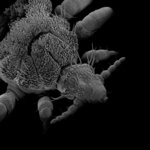
| Scientific Name | Antarctophthirus trichechi |
|---|---|
| Comments | LouseBase accession number: GLA.M12 |
| Specimen Condition | Dead Specimen |
| Identified By | V. S. Smith |
| Sex | Female |
| Life Cycle Stage | adult |
| Body Part | head, thorax |
| View | dorsal |
| Collection | Specimens from the collection of V. Smith |
| Copyright |
©

|
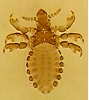
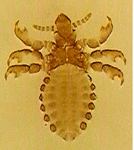
| Scientific Name | Haematopinus eurysternus |
|---|---|
| Comments | Parasite of Bos taurus |
| Specimen Condition | Dead Specimen |
| Copyright | © 1996 Iowa State University''s Entomology Image Gallery |

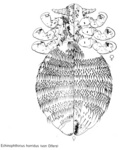
| Scientific Name | Echinophthirius horridus |
|---|---|
| Sex | Female |
| Life Cycle Stage | adult |
| View | dorsal/ventral |
| Copyright | © The Pacific Coast Entomological Society, San Francisco |
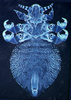
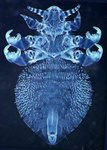
| Scientific Name | Antarctophthirus microchir |
|---|---|
| Specimen Condition | Dead Specimen |
| Identified By | Vince Smith |
| Sex | Male |
| Life Cycle Stage | Adult |
| Copyright |
© 2006
|
About This Page
The Natural History Museum
Emilie Bess
Illinois Natural History Survey, Champaign, Illinois, USA
Correspondence regarding this page should be directed to Emilie Bess at
Page copyright © 2009 and Emilie Bess
All Rights Reserved.
- First online 07 March 1997
- Content changed 14 April 2009
Citing this page:
Smith, Vince and Emilie Bess. 2009. Anoplura . Sucking Lice. Version 14 April 2009 (under construction). http://tolweb.org/Anoplura/13871/2009.04.14 in The Tree of Life Web Project, http://tolweb.org/


